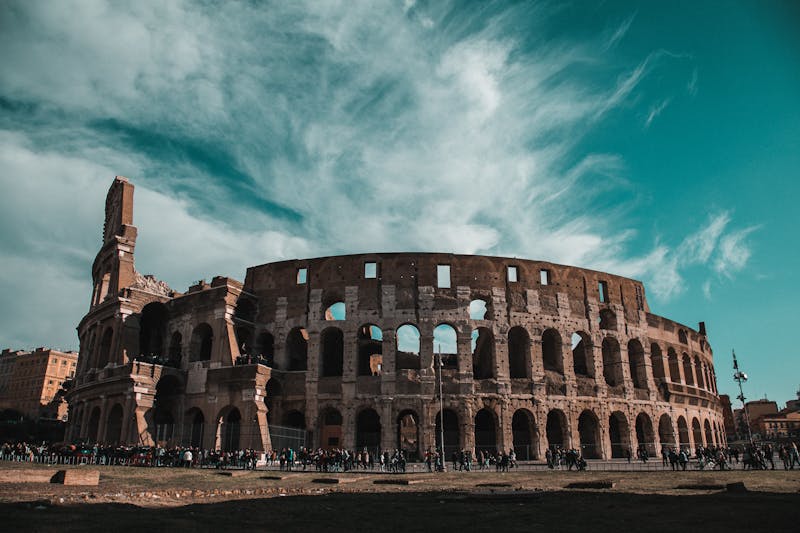
Rome works best when visited by area, not by checklist. The archaeological core (Colosseum–Forum–Palatine) takes a solid half-day. The Vatican, across the Tiber, eats a full day between Museums and Basilica. The historic centre — Pantheon, Trevi, Navona, Spanish Steps — covers in an afternoon on foot. Trastevere is for the evening. Everything fits within 3-4 km, but summer heat and crowds double your timings. Distances are deceptive: from the Vatican to the Colosseum it's a 30-minute walk under the July sun, or two metro stops (A+B with a change at Termini).
📜 History at a glance
Rome was founded on 21 April 753 BC according to the legend of Romulus and Remus; excavations on the Palatine confirm 8th-century BC settlements. Four centuries of monarchy, then five of oligarchic republic, finally — from 27 BC under Augustus — the centre of an empire stretching from Britain to Egypt. In the 2nd century AD it housed about one million inhabitants, a figure Europe would not see again until the 19th century. After the fall of the Western empire in 476, the city emptied: by the early Middle Ages just twenty thousand remained. Rebirth came with the 15th-century popes: Nicholas V, Julius II and Leo X commissioned Bramante, Michelangelo and Raphael to build the new St Peter's, the Sistine Chapel and Bernini's squares. On 20 September 1870 General Cadorna's troops entered through Porta Pia and Rome became capital of the Kingdom of Italy. Today three Romes overlap — ancient, papal, modern — visible within 500 metres of Via dei Fori Imperiali.
📅 Best time to visit
April-May and September-October are the best months: 18-25°C, long daylight, manageable queues. April also brings Rome's Birthday (21 April) and Easter, with papal ceremonies at St Peter's filling the city. June-August is peak summer (28-35°C, peaks of 40°C in August): heat and humidity make open sites like the Forum and Palatine punishing, but evenings are long and packed with events (Estate Romana). Flights are most expensive between July and mid-August. November-March is low season: rain in November, 5-15°C between December and February, but short queues at museums and flights from €30-50 from Milan or Naples. December is popular for Christmas (nativity displays, Piazza Navona markets) but weather is unpredictable. Avoid mid-August (Ferragosto) if you want traditional trattorias: many shut.
🏛️ Why visit Rome
Colosseum + Forum + Palatine — combined 24h ticket €18 (€22 with arena and underground access), 9:00-19:00 (last entry 17:30). Online booking essential; plan 3-4 hours. Vatican Museums + Sistine Chapel — €17 (€21 with booking, recommended), Mon-Sat 8:00-18:30, last entry 16:30. Allow 2-4 hours; the Chapel sits at the end of the route. St Peter's Basilica — free, 7:00-18:30; dome climb €8 by stairs, €10 with lift. Borghese Gallery — €15 with mandatory booking, 2-hour timed slots: Caravaggio, Bernini, Titian. Pantheon — €5 (free under 18 and first Sunday of the month for EU residents), 30 minutes are enough. Trevi Fountain and Spanish Steps — always open, free; for crowd-free photos arrive 6:00-7:00. Castel Sant'Angelo — €15, rooftop terrace with views over St Peter's. Mouth of Truth (Santa Maria in Cosmedin) — free, but €2 to take the photo.
🗓️ Suggested itineraries
1 day: morning Colosseum + Forum + Palatine (3h, entry at 9:00), lunch in Monti (1h), afternoon Pantheon → Trevi → Spanish Steps on foot (2h), dinner in Trastevere. 3 days: day 1 as above; day 2 Vatican all morning (Museums + Chapel + Basilica + dome, 5h), afternoon Castel Sant'Angelo + riverside, evening in Prati; day 3 Borghese Gallery (9:00 slot, mandatory 2h) + Villa Borghese on foot, lunch around Spanish Steps, afternoon shopping on Via del Corso or Monti, dinner in Testaccio. 7 days: the 3 above + day 4 Ostia Antica (train from Piramide, 30 min, less touristy than Pompeii), day 5 Tivoli (Villa d'Este + Villa Adriana, train + bus from Tiburtina), day 6 Castelli Romani with Frascati and Nemi (train from Termini), day 7 EUR + a museum (MAXXI, GNAM, Centrale Montemartini). Seven days cover Rome plus surroundings comfortably.
🍽️ Local cuisine
Roman cuisine is poor man's food, built on offal and the "fifth quarter". The five pasta pillars: carbonara, cacio e pepe, amatriciana, gricia and pajata. Mains: saltimbocca, slow-roast lamb, oxtail (coda alla vaccinara), tripe. Starters: supplì (€2-3), fried courgette flowers, Jewish-style artichokes. Roman pizza is thin and crisp (by weight €8-12/kg), different from Neapolitan. For honest prices and quality: historic trattorias in Testaccio (Felice, Flavio al Velavevodetto, Perilli — lunch €25-35), Trastevere (Da Enzo al 29, Da Lucia), Monti (La Carbonara, Taverna dei Fori Imperiali). Avoid set tourist menus near the major sights (€15-20 with overcooked pasta). Gelato: Giolitti (since 1900), Fatamorgana for unusual flavours, Gelateria del Teatro. Coffee €1-1.20 at the counter, €3-5 sitting down in central squares.
🗺️ Neighbourhoods to explore
Historic centre (Pantheon-Navona-Trevi-Campo de' Fiori): tourist heart, walkable in half a day, high prices, always crowded. Trastevere: across the Tiber, medieval alleys, authentic trattorias, young nightlife (gentrifying fast). Monti: between the Colosseum and Termini, vintage boutiques, cocktail bars, considered restaurants. Testaccio: the food district par excellence — covered market 8:00-14:00, historic trattorias, nightlife at the former slaughterhouse. Prati: next to the Vatican, ordered and middle-class, great for sleeping (3-star €80-120) while staying near the centre. Coppedè: small Art Nouveau gem north of the centre, off the tourist trail, 20 minutes on foot from Villa Borghese. EUR: 1940s rationalist district, monumental architecture, parks, far from the centre (15 minutes on metro B).
🎭 Events and festivals
21 April: Rome's Birthday, historical re-enactments at the Circus Maximus. Easter: Good Friday Way of the Cross at the Colosseum, Easter mass at St Peter's. June-September: Estate Romana, city-wide festival with open-air cinema, concerts, exhibitions in monumental spaces. July: Lungo il Tevere, markets + food + concerts along the river. September: Notte Bianca, museums open free until dawn. 8 December: Immaculate Conception, the Pope at Piazza di Spagna. Early December: Christmas markets at Piazza Navona (artisan nativity scenes). New Year's Eve: street party at the Circus Maximus.
✈️ How to get there
Rome has two airports. Fiumicino (FCO) is the main hub: intercontinental and scheduled flights (ITA Airways, Ryanair, easyJet, Wizz Air, Vueling, all legacy carriers). Domestic flights from Milan €30-100 (1h10), Naples €25-70 (1h), Catania €40-120 (1h15). From Europe: London 2h30 €40-150, Paris 2h €50-180, Madrid 2h30 €60-200, Berlin 2h15 €70-200. From the US: New York JFK 8h €450-900. Ciampino (CIA) serves only low-cost (Ryanair, Wizz Air): smaller and closer, flights often €20-50 cheaper but airport-to-centre links are more limited. Useful alternative: high-speed Frecciarossa/Italo trains from Milan Central 3h €30-99, from Florence 1h35 €25-65, from Naples 1h10 €15-50, from Venice 3h40 €40-95.
🚇 Getting around
ATAC network: 3 metro lines (A orange Termini-Vatican-Spagna-Anagnina, B blue Termini-Colosseo-EUR-Laurentina, C green Pantano-San Giovanni), trams and buses. BIT single ticket €1.50, valid 100 minutes on bus/tram/metro or single metro ride. Tourist passes: 24h €7, 48h €12.50, 72h €18, weekly CIS €24. Roma Pass: 48h €33 or 72h €52, both include 2 museums (the Colosseum counts as one) — worth it if you visit ≥3 museums and use public transport. From Fiumicino: Leonardo Express €14 in 32 min every 15 min; SitBus or Terravision coach €7 in 60 min; taxi flat rate €50. From Ciampino: Terravision/SitBus coach €6 in 40 min; flat-rate taxi €31. ZTL (limited traffic zone) in the historic centre is active 6:30-18:00 Mon-Fri and 14:00-18:00 Sat: fine €83. If driving, use the park-and-ride lots at metro stops (Anagnina, Cornelia, Laurentina) for €1.50 with day ticket.
💰 Budget and prices
Return flight from Italy €40-150, from Europe €70-250 low season, up to €400 in August. Hotel: hostel/B&B €25-50/night in shared dorm or budget private; 3-star central €80-140 low season, €150-280 peak; 4-star €150-280 / €280-500; historic hotels above €400. AirBnB studios in Trastevere/Monti €70-130. Meals: pizza by weight €8-12/kg (slice €4-6), lunch in a basic trattoria €18-25, dinner in a good trattoria €28-40 per person with wine, mid-to-upmarket restaurant €50-80. Coffee at the counter €1-1.20. Sights: average ticket spend for 3 intensive days €60-90 per person. Transport: 72h pass €18. Weekend total for two (excluding flights): €300-500 low season, €500-900 high season.
📋 Practical info
Currency euro. Italian language, English common in tourist areas. Tipping not mandatory: 5-10% only for exceptional service. Taxis: white cars with meter only, ignore offers at the airport; radio apps itTaxi, FreeNow. Tap water safe to drink, as are the nasoni (public drinking fountains, everywhere). Pickpockets active on bus 64 (Termini-Vatican), 40 and on metro A: bag in front, no wallet in back pocket. Plugs type F/L 230V (adapter needed from UK/US). Public WiFi from ATAC at metro stations, free after registration. Useful apps: Probus or Moovit for transport, Ticketone for museum tickets.
💡 Practical tips
- Book the Vatican and Borghese Gallery online: without booking you will be turned away.
- The 72h Roma Pass pays off if you visit ≥3 museums and use public transport.
- Trevi Fountain photos without crowds: arrive at 6:30-7:00 in the morning.
- Drink from the nasoni (public fountains): bring a refillable bottle, save €15/day on bottled water.
- Skip restaurants with photo menus: walk 200m down a side street and prices halve, quality doubles.
- Free Sundays at state museums: the Colosseum is unmanageable; aim for the Borghese (1st Sunday of the month).